


Life, Credit, and Housing
EURIBOR: What Is It, and How Does It Affect Your Mortgage Payments?
Anyone getting married wants a home, and anyone buying a home has certainly heard of EURIBOR. But, after all, what is this EURIBOR that so many people talk about, and how does it relate to taking out a mortgage to buy a home? That’s what we’re going to find out right now.

What is Euribor, and how does it affect mortgage loans?
EURIBOR, an acronym for Euro Interbank Offered Rate, is a rate created on the eve of the introduction of the single European currency (1999). It is based on the average of the interest rates applied to short-term loans between a panel of European banks and has a significant impact, particularly on those with variable-rate mortgage loans.
It is calculated daily and varies depending on the term (one week, one month, three months, six months, or one year). In the specific case of mortgage loans in Portugal, it is common to use the 6-month or 12-month EURIBOR.
Therefore, when we intend to take out a variable-rate mortgage, this rate will be calculated by adding the spread (which is the profit margin the bank retains for itself and determines based on the customer’s risk) to the EURIBOR; in other words, this means that the interest rate applied to your monthly payment will consist of these two components.
When we talk about the spread, we’re referring to a fixed component, but the same is not true of the EURIBOR; when the EURIBOR rises, the amount due for the mortgage payment will consequently increase. If it falls, the monthly payment will also decrease.
Note: This variation occurs because we are talking about a variable-rate mortgage; if you choose a fixed-rate mortgage, the monthly payment will remain the same throughout the entire term of the loan.
While EURIBOR rates had been below zero for quite some time up until the first few months of 2022, opting for a variable-rate mortgage was highly advantageous; however, the recent interest rate hikes by the European Central Bank (ECB) are imposing additional costs on those with home loans and putting significant pressure on households’ debt-to-income ratios.
Note: To account for potential market volatility, some banks offer a type of hybrid rate: a mortgage loan in which the first five, 10, 15, or more years have a fixed rate, after which the rate switches to a variable rate at a certain point.
Due to rampant inflation across the European Union, EURIBOR rates have been rising across all maturities and have been in positive territory since April 21.
Below, we provide the average 1-, 3-, 6-, and 12-month Euribor rates that will be used in the rate review; the average rate for the month prior to the review will be taken into account.
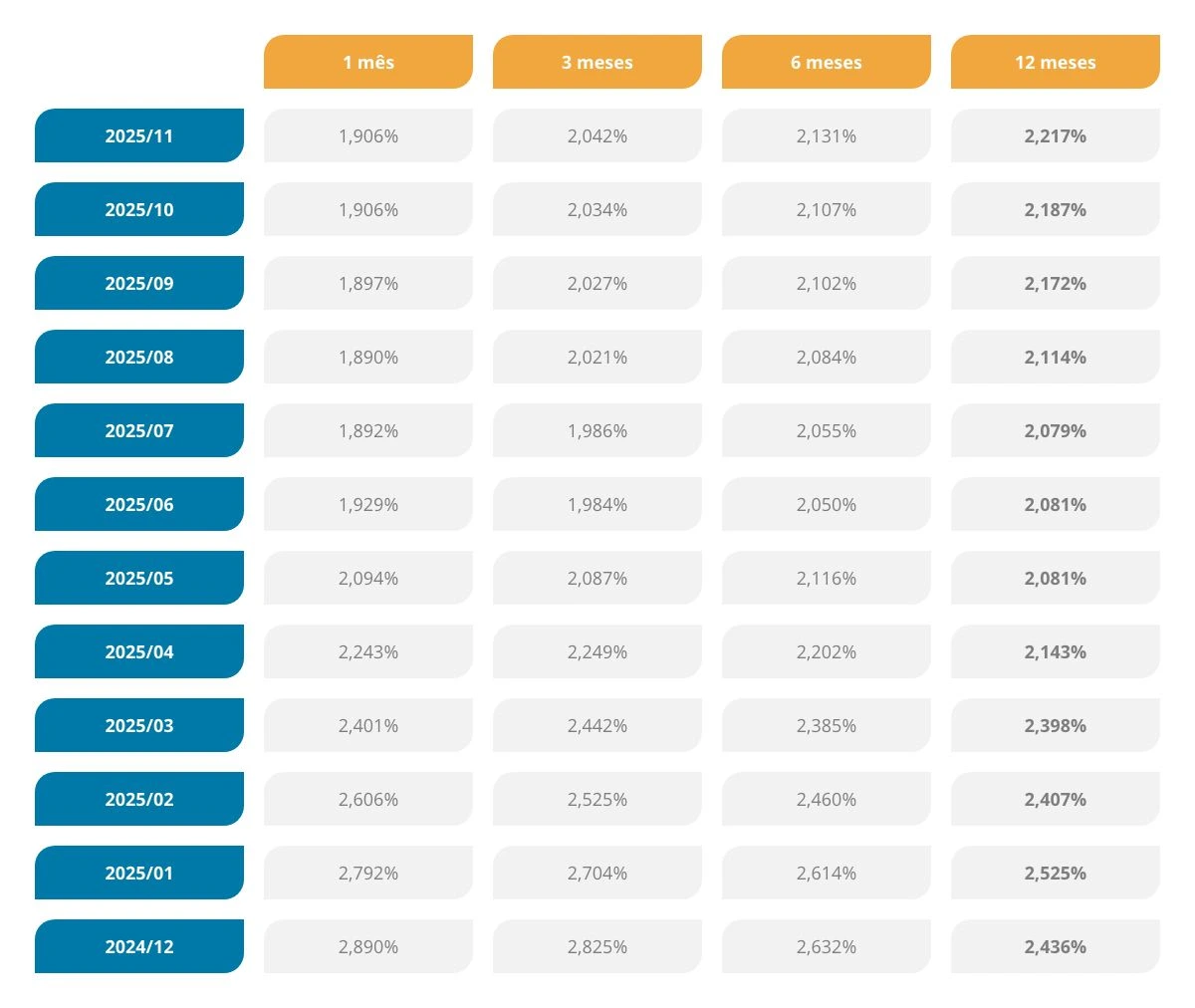
With 12-, 6-, and 3-month rates already positive and on the rise, what can we do?
Source: Euribor Rates
What to do about the positive EURIBOR rate?
While the EURIBOR was in negative territory, those with variable-rate mortgage contracts paid less for the loan to purchase their home, but with this rate rising and now clearly in positive territory, the increase in housing costs could put some pressure on households’ debt-to-income ratio.
With this in mind, if you haven’t taken out a mortgage yet, it’s important that, when researching and comparing offers, you don’t focus solely on the monthly payment you’ll make to the bank, but also on the so-called MTIC (Total Amount Charged to the Consumer), which is the total cost of the loan, including the principal, interest, the cost of life and comprehensive insurance, and any applicable fees.
If you already have a mortgage and the EURIBOR rates to which your contract is indexed are positive, the best way to minimize the impact on your monthly payments is to switch from a variable rate to a fixed rate or even refinance your mortgage with a bank that offers better terms.
In either case, it’s important to keep in mind that life insurance (which is not mandatory but is recommended to qualify for a mortgage) can be a significant expense—but it doesn’t have to be, since you are not required to purchase the life insurance policy offered by your bank.
With the rise in the EURIBOR putting pressure on your monthly mortgage payments, take a moment to review the life insurance policy you purchased with your mortgage and see if you’re paying too much for it. If the answer is yes, know that you can save up to 60% on your life insurance with EXS.
In addition to providing financial protection and security for you and your family, EXS Home Life Insurance ensures that, in the event of premature death or a serious, disabling accident, the debt owed to the bank will be paid off.
This way, in addition to safeguarding your assets, your family members and insurance beneficiaries will not be burdened with a substantial expense (and will not lose a source of income). In summary, EXS’s Home Life Insurance offers you the following benefits:
- Guarantees that the debt to the bank will be paid off and also ensures the protection of your assets in the event of premature death or a serious, disabling accident;
- The option to switch insurance companies and transfer your mortgage life insurance at any time to take advantage of lower rates;
- Access to the best solution at the best rate, following a thorough comparison of the offers available on the market;
- Transfer your mortgage life insurance without increasing the spread and gain access to more comprehensive coverage;
- Save up to 60% on your current insurance premium.
Request a no-obligation quote here and find out how much you can save!